Posts Tagged ‘shirts’

Details Matter

Friday, August 12th, 2011

I finally got the shirt that I ordered off Fab (FYI, if you want an invite, I’d be glad to send you one) from the wonderfully creative Out Of Print clothing company. They make amazing shirts featuring artwork from out-of-print editions of great works. They also have a mission (from their site):

Out of Print celebrates the world’s great stories through fashion. Our shirts feature iconic and often out of print book covers. Some are classics, some are just curious enough to make great t-shirts, but all are striking works of art.

We work closely with artists, authors and publishers to license the content that ends up in our collections. Each shirt is treated to feel soft and worn like a well-read book.

In addition to spreading the joy of reading through our tees, we acknowledge that many parts of the world don’t have access to books at all. We are working to change that. For each shirt we sell, one book is donated to a community in need through our partner Books For Africa.

How we read is changing as we move further into the digital age. It’s unclear what the role of the book cover will be in this new era, but we feel it’s more important than ever to reflect on our own individual experiences with great literary art before it’s forever changed.

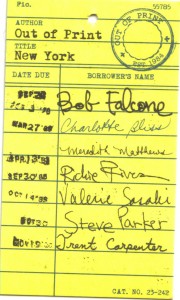
The one thing I was really struck by was the shirt’s tag. It’s always a great feeling to see that someone cared enough about the whole user experience to seamlessly meld ideas into a cohesive, coherent brand package. For a group concerned with literary tradition, they nailed the concept – my clothing tag was an old punch library card with the names of all the creatives involved in the project.

Details matter. The experience doesn’t stop with a purchase or a click through.

User Experience of the Well Made Shirt

Thursday, January 28th, 2010

This week has another drawn out metaphor! Hoorah for metaphors! I’ve been thinking about the user experience with everyday objects lately for a personal project of mine and have been thinking carefully on objects I use and admire. A local men’s clothing store near my work recently had a 50% off sale and I went in to take a look. I’ve learned over the years how to look for certain quality elements in the things I buy for myself and I got to thinking of the years of precision and know-how that have gone into making a high-quality dress shirt. It makes sense, to spend the time and effort (and, by proxy, the cash) on something that a gentleman wears every day (well, almost everyday) if it means a better experience overall. Making a good user experience means the client feels you’ve done nothing at all – that there is a seamlessness to the experience that allows the user to dwell on the task at hand because the interface is so comfortable and easy. I’ll walk through some examples of good user experience in a dress shirt, showing how each piece solves a small problem

Horizontal Buttonholes
Buttonholes serve to keep the garment fastened, plain and simple. The reason buttonholes in dress shirts run vertically is two fold: one one hand, the vertical lines look good with vertical stripes and stitching, and on the other, the vertical buttonhole keeps the button in the middle of the hole while making sure that no stress unbuttons it. Two holes in the shirt, however, have different stress points: the neckline (the collar) and the waistline (at the belt level).

The neck and hips both rotate horizontally while the chest and stomach, when they do rotate, rotate vertically along the spine. This causes stress to be placed in the opposite direction from the position of the vertical buttonholes at these locations. Tailors, being the designers they are, came up with a nifty solution:

horizontal button holes

Horizontal buttonholes at the waist and neck now distribute the pressure from twisting motion! But wait, doing so suddenly ruins the nice, clean centered button everytime force is applied. The button will slide from the middle, to the opposite side of the force and back again. That wouldn’t look good, except these buttons are hidden from view by the tie at the neckline and the belt and trousers at the waistline. Brilliant!

Gusset Reinforcements
Speaking of pressure, the shirt has pressure applied anyplace that two pieces of fabric meet. Normally seams take all this pressure, but what of areas that require openings such as the cuffs and the space where the front and back tails meet along the coronal plane of the body? Over time, tailors found these meeting of the folds took much of the stress of the garment. To solve this and make the shirts last longer, tailors employed gussets: small pieces of fabric and stitch that held fast like so:

gussets on shirts

These reinforcements are not that noticeable, but they add long-term value to the shirt while solving a fundamental problem, which keeps the user happy as their shirt secretly holds up throughout the day

Undercollar Construction
The collar of a shirt is arguably one of the most distinctive aspects to the shirt. Button down, point, or wing collars all give a clean line to the face of the gent wearing it. Tailors know this but they also know that men sweat and need to wash the shirt over and over again in its lifetime. The problem with washing is the shrinking effect it can have on fabric. To keep the points clean and the collar looking sharp, Tailors build in undercollars. Undercollars are woven differently than the top collar to not pull on the top fabric if they shrink:

Undercollar fabric

The undercollar really highlights a good user experience in that the shirt, despite repeated cleaning, looks great everytime. The undercollar is almost never, ever seen, much less noticed, yet it just works to make the user appreciate the forward-facing part of the shirt.

Buttons and Stitching
Buttons and stitches are the main reinforcements of the garment, and as such, need to be sturdy and many. Buttons on well made shirts are generally pearl, rather than plastic. Though Tailors found that it was cheaper to use plastic or resin buttons, they cause the buttons to slip from their holes easier and can chip and crack more often than their stronger pearl counterparts. Stitches hold all the pieces of the garment together, so the more per square inch, the more the shirt feels like a single piece, moving as one.

pearl buttons and 20 stitches per inch

The phrase, “A stitch in time, may save nine” is literal here. This translates to any user experience developer: by spending the time and effort to make the experience better up front, the system becomes easier to maintain and by thinking of the details, the major pieces are already in place.

When developing a user experience, think about the ways the user will operate the system. Where will the user notice problems? Where will the pain points be? By gathering feedback and thinking critically, we can reinforce the way the user interacts to ensure a seamless and brilliant feel for our users. By taking care of the problems the user might run into, be provide an interface that the user feels is bespoke, made for them. When we do things right, the experience is as nice and comfortable as your favorite shirt.