Archive for the ‘Usability’ Category

Learned Pattern Recognition

Tuesday, August 23rd, 2011

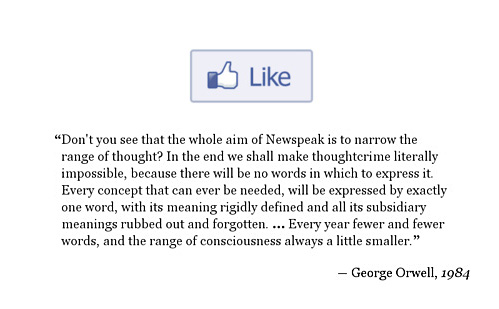
I was having an interesting conversation with Alex Jones the other day, remarking about the usability studies by Peter Steen Høgenhaug around the ‘link’ iconography in CMS software. Alex touched on this in his blog with Usability of the Link Icon and earlier with Replacing the Save Icon. It’s interesting when we encounter patterns in systems that other designs tend to perpetuate and we create learned patterns that users who interact with our systems get used to over time.

As Alex points out, Høgenhaug did test with users unfamiliar with the CMS software and were not used to patterns in those systems even though many systems use very, very similar iconography. It would be interesting to see that case applied to frequent users (a simple pattern learned once, to be sure).

I’m a big fan of re-evaluating systems on a regular basis because I think it keeps UX professionals fresh. I’m always worried that too often, as technology changes, as systems become more complex and evolved, we rely on older iconography, older user patterns, and the ‘traditional’ ways of thinking. I feel that we should be looking deeply at the user base to come up with new and innovative methods to teach users new structures rather than relying on old habits and patterns. Saving to a disk may no longer be a useful user action, versions could be closer to the path you want users to take. Sharing, Tweeting, Manipulation – new and interesting actions have cropped up for users. It’s up to designers to take a step back and look at how these actions are taken in the system and craft designs which encourage these actions but are not confusing.

Dieter Rams: Cold War Modern

Thursday, August 4th, 2011

I love this interview with Dieter Rams about his influence in product and industrial design. He speaks about how he developed his ‘ten principles’ and why he felt there was a need for products to be devoid of excess, yet still allow for customization on the part of the consumer.

Rams also discusses how the concept of “Less, but Better” can be though of as a way towards user-centered design. It’s easy to see why Jonathan Ive is his spiritual successor at Apple, creating thoughtful details which make the product work without making the user feel forced.

You’re my Type

Saturday, May 7th, 2011

meta-serif

My buddy Devin Price (over at WPTheming) turned me on to a really near magazine concept, called COLORS. The site is really, really well done and the magazine is published in two languages of your choice (want a copy in French and Portuguese? Done.) with brilliant layouts and well written articles.

I was really drawn in by their use of Meta-Serif, it really works as an accent for them. They have a very clean and open layout that brings the content front and center, so their choice for typography was unobtrusive and clean.

stfu, noobs

Thursday, April 22nd, 2010

A conversation transpired the other day in which a colleague of mine remarked that he’d had it with “hacks” in our industry – that is, those who call themselves developers and designers but still use recycled code, un-secure scripts, and kludged together markup. He complained that there should be an education requirement (like that of doctors, lawyers and engineers) and that the lack of professional underpinnings was killing our industry. He argues:

“There’s such a low entry level to our industry, all you need is photoshop & wordpress to build a site”

“… [T]here are hacks in the webdesign/deve industry (like other industries) and education would help weed them out.”

“Anyone can participate even if they’ve never built a site before or their a seasoned vet.”

These arguments (and I hear them frequently amongst professionals in my field, especially after a few years of making a good, honest living doing this) are worrisome to me. I myself did not earn any degree in my industry (for those that don’t know: I have a B.S. in Microbiology and Immunology. NOT Web development. NOT Advertising. NOT Computer science.) and in fact, most of my most trusted colleagues didn’t either. Ours is a very, very young industry and we should do well to remember that our pioneers are not so old yet. Even surgery was once the domain of the barber. I think the low level of entry is amazingly effective in bringing in new talent who really want to understand and change the industry in new and powerful ways. What first got you into the Web field?

Education, to me, seems a horrifyingly poor way to “weed out” those hacks in the industry. High-powered ADAs who help put away mass murders, rapists, and pedophiles went to law school. The ambulance chasers and DWI-Dudes also went to law school. Education seems to be a rather poor way to separate the hacks from the pros – there are plenty of diploma-factories out there who are all to happy to give you a slip of paper giving you a degree in “Web Paging” in exchange for cold cash. The education is nice, but it’s my belief that Mark Twain was right: “I have never let my schooling get in the way of my education.” I myself teach classes on development and accessibility, I give back by posting on forums and message boards, I try to attend meetups and conferences to learn and share my knowledge with others because it keeps my skills sharp as well as opening me up to learn something from those with different life experiences.

The last point really gets under my skin. I feel that an argument like this is birthed from time removed from a time when the professional was starting out. I will be the first to admit I came in through the hobby and hacker route – I was a little script kiddy doing my best. I learned from stealing source code, playing with scripts from other sites and honestly hacking crap together until I understood how it worked. Tim Berners Lee started this little experiment to help researchers publish content to a hub. This isn’t the Sorbonne, it’s the Wild West – it’s open and free and it’s what we all love deep down in our hearts. I feel the day that we treat this as an elites-only walled garden, is the day our profession will have fallen to so much accounting and pixel pushing. I know the concern is that it lowers professionalism for those of us who make money doing this professionally, but it’s true for any industry. There are those who will prefer the cheap suits at Sears, but there are plenty who respect and want a bespoke piece from Savile Row. The cream always rises to the top, so they say.

So I welcome all the hackers, hacks, script kiddies, punks, and noobs. There’s always more to learn, more that noobs can teach us about ourselves and our established modes of thinking and that’s frankly better for all of us.

Being Gorgeous

Tuesday, April 20th, 2010

As the wonderful Mr. Fry points out, the secret to being gorgeous is in one’s attitude of mind. By being mindful of good design choices and good interactions, users will tell us that we are wonderful. The secret is really in mindfulness – the more time and effort we put into designing quality interactions with touches and flourishes of UX goodies, the better our products become. The late, great John Slatin once told me that he felt that those who were mindful of accessibility and usability were so often far and away better than their peers at those areas. Because the Web is a mutable form, because users are constantly interacting with the implementation, and because feedback is easier and faster than ever before, we need every facet to gleam, every seam to be stitched and everything to look, well, gorgeous.

I’ve been thinking a lot about attention to details, something I’ve always struggled with (even though I know when I do it I’m so much better off because I take more pride in the thing I’ve created), and I’m making a larger push in my design and development to really focus on those details and little things that don’t so much make people notice them, but feel at ease because everything is just right.

Thinking about little details in a broad way helps one understand the full scope. If, for instance, a user is making a purchase on a site for the first time and there are lots of well done photos of the object or all the buttons fit the site look or the breadcrumbs show the steps a user needs to take; then there is a slow building of confidence – the user now trusts the seller because if the process was so tight on the details, the worries of shipping, security, etc are lessened (for better or worse) and customer confidence improves.

So let’s take some of Mr. Fry’s advice – the more we pay attention to making our interfaces and processes gorgeous, the more people will tell us so, which is the secret, really.